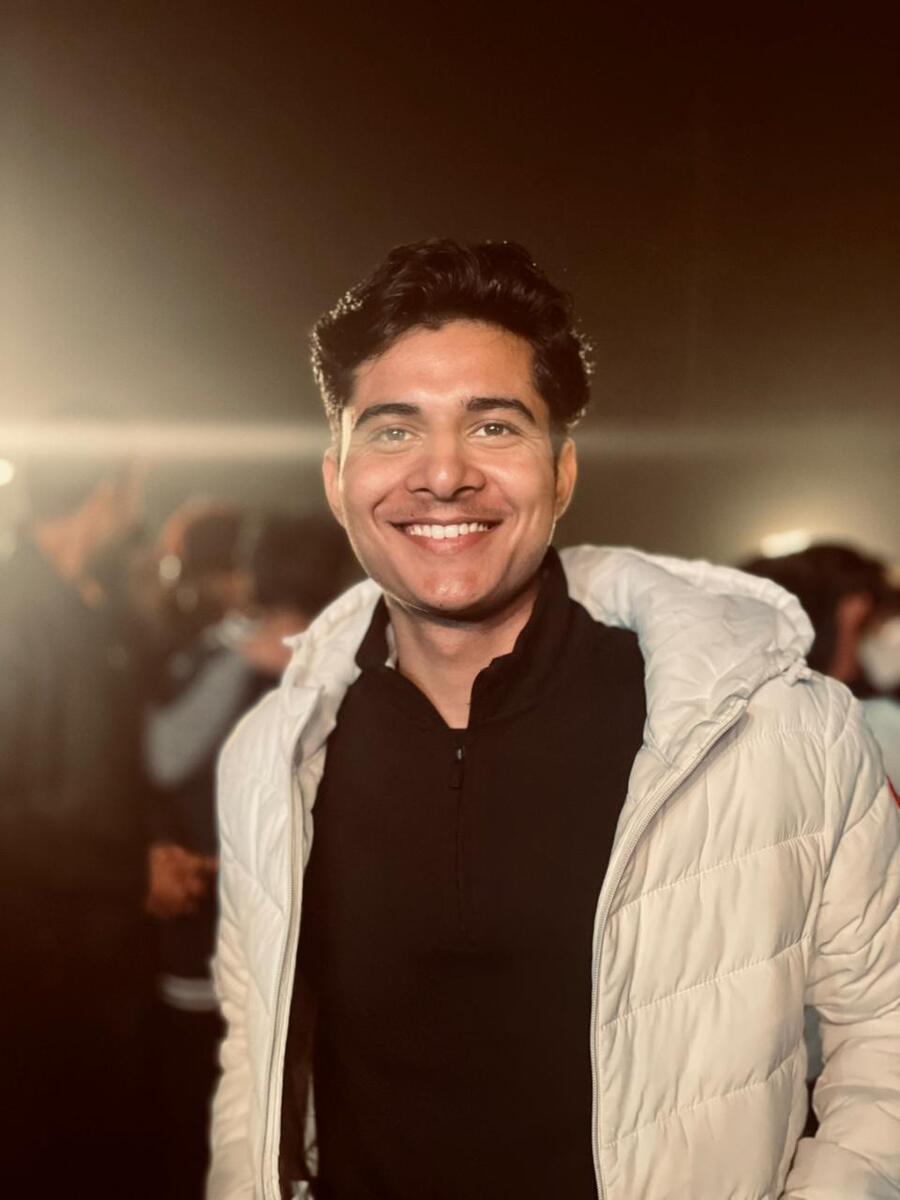
Back in 2021, I had just finished 12th grade and was waiting to step into college.
I had time to notice things around me.
One day, on my usual route, I saw something that really bothered me: an open patch of greenery had turned into a garbage dump.
Plastic, food waste, wrappers, everything lying in the open.
People walked past it every day.
Some didn’t care at all.
Some may/may not have complained.
And something in me said, “If this annoys you so much, do something.”
So I did.
I wrote a complaint to the Deputy Commissioner of Bilaspur.
A few weeks later, a board appeared at that spot: “Littering Fine – ₹5000.”
Was it because of my complaint?
I don’t know.
But I felt proud.
At least something was done.
Whether it solved the problem or not was another matter.
Fast-forward to 2025
Three and a half years later, after college, I decided to go for a run on the same route. And what do I see?
The board is still there, but tilted, almost falling apart.
And the garbage?


It was never picked up, now, it’s more of it.
This time even more visible, right on the road.
That moment hit me hard.
It wasn’t about the garbage anymore.
It was about our mindset.
What I Realised
Over the years, I have understood something about people.
Most people don’t notice.
Or worse, they choose not to.
Some people notice, complain, rant on WhatsApp groups, tweet about it, maybe make a reel, but stop there.
A few genuinely want to act, but they don’t know how. They care, but they are clueless about where to start or which platforms exist.
And then there is a tiny minority who actually does something. I have always wanted to be in that group.
So What Did I Do This Time?
I didn’t stop at feeling bad.
I took pictures, filed a complaint through the Swachhata App (an initiative by the Government of India), and emailed the Municipal Council of Ghumarwin with proof.
Will this fix it overnight?
Probably not.
I am not even sure what action will follow.
But at least I acted.
The Bigger Problem
The Swachhata App exists.
It works.
But here’s the problem: most people don’t even know it exists.
That’s the information gap.
Look at the numbers:
Over 2 crore users have filed 2.39 crore complaints, with 2.24 crore resolved. That’s a 93.7% resolution rate.
Every month, 2.3 lakh complaints are filed, and 2.1 lakh get resolved.
The system is there.
The tools are there.
But awareness isn’t.
And when people don’t know, they assume nothing can be done.
And honestly, this isn’t just about garbage.
It’s a mindset.
It’s about accountability and action.
Take Himachal during the monsoon.
Between June 20 and July 16 this year, 109 people died and 226 roads were blocked by landslides and heavy rain. Another report puts the toll even higher, 135 killed, 432 roads blocked, and water and power supply disrupted for days. Landslides have gone up six times in just a few years. In 2020, there were 16 major incidents. By 2022, that number jumped to 117.
You know what makes this worse?
Our own negligence.
Plastic dumped in drains clogs water flow.
That causes waterlogging.
That turns into floods.
And then we call it “nature’s fury.”
But it’s not just nature. It’s us and the systemic gaps we ignore.
Yes, there are scientific reasons too. One big factor is the increase in Western Disturbances during the monsoon. Normally, these weather systems come in winter, but now they’re overlapping with monsoon rains. This year alone, there were 14 such events between June and August, much higher than usual. This overlap causes heavier rainfall, which triggers more floods and landslides in the Himalayas.
Nature plays a part.
But human choices, urban planning failures, poor waste management, and lack of awareness turn heavy rain into a disaster.
So What Can You Do?
Next time you see a problem, here is what I want you to do.
First, stop ranting and start reporting.
If it is a civic issue, use the Swachhata App or call your municipal office.
Second, be specific.
Give proof.
Share pictures, location, and details.
Make it easy for authorities to act.
Third, demand accountability.
Do not let the authorities go silent after your complaint.
Follow up.
Ask for a timeline.
Push for transparency.
Fourth, talk about solutions, not just problems.
Do not just say “this is wrong.”
Suggest what can be done.
Fifth, educate people around you.
Most people do not know these tools exist.
Tell your friends, your family, your society. Collective pressure works.
And to the authorities reading this, your job does not end with putting up a board.
Enforcement matters.
Follow-up matters.
People trust governance when they see results.
Transparency, updates, and acknowledgement matter.
If you want citizens to be proactive, you need to meet them halfway.
This Isn’t Just About Garbage
This is about civic health.
It is about social harmony.
It is about environmental preservation.
When you throw a polythene bag today, you risk a clogged drain tomorrow.
That clogged drain becomes a flood.
That flood destroys homes and takes lives.
In Himachal this year, hundreds of people have died.
Roads are gone.
Families displaced.
Do you think this has nothing to do with small daily actions?
It does.
How to Stop Being a Complainer and Start Being a Doer
See the problem. Own it. If you notice something wrong, stop thinking “not my job.”
Take the first step immediately. File that complaint. Take that picture. Make the call.
Stay on it. Change rarely happens in one attempt. Push. Follow up.
Build collective action. Involve your society, friends, or local groups. More voices get quicker results.
Educate and inspire. Share what you did. Someone else will do it because you showed it is possible.
That tilted board taught me a powerful lesson.
Rules and systems mean nothing without people who care enough to act.
Do not wait for someone else to fix things.
That someone is you.
I am not bragging about what I did.
I just refuse to be part of the crowd that lets things happen to them.
I need a change.
I will work for it.
So should you.
Because if you don’t take action, nobody will.
Be the change that you wish to see in the world.
If you’ve read this far, thank you.
And if any of this struck a chord, don’t just scroll away.
If you have ideas, resources, or even the willingness to help me take real steps (like a cleanliness drive or anything else we can do), DM me, email me, or just share your thoughts. I’m open to a real conversation. Let’s make a difference, even if it starts small.